The building
NASA's Sustainability Base at Ames Research Center was designed to be one of the most environmentally advanced federal buildings ever built — LEED Platinum, net-zero energy, with systems that adapt to occupancy and climate in real time. The building itself was a story worth telling.
The brief was leave-behind collateral: a brochure that could be handed to visitors, dignitaries, and stakeholders to communicate the building's significance and the technology inside it. The audience ranged from engineers who understood the systems to elected officials who needed to understand the achievement.
When the subject matter is legitimately extraordinary, the design's job is to get out of the way — and then elevate. Not to perform drama, but to carry it.
Design direction
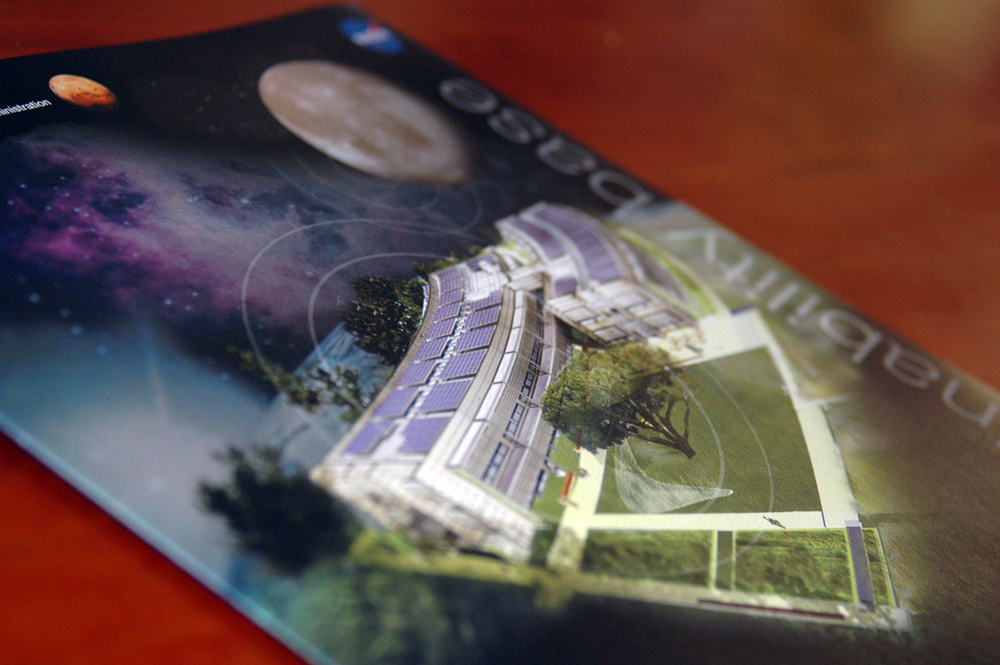
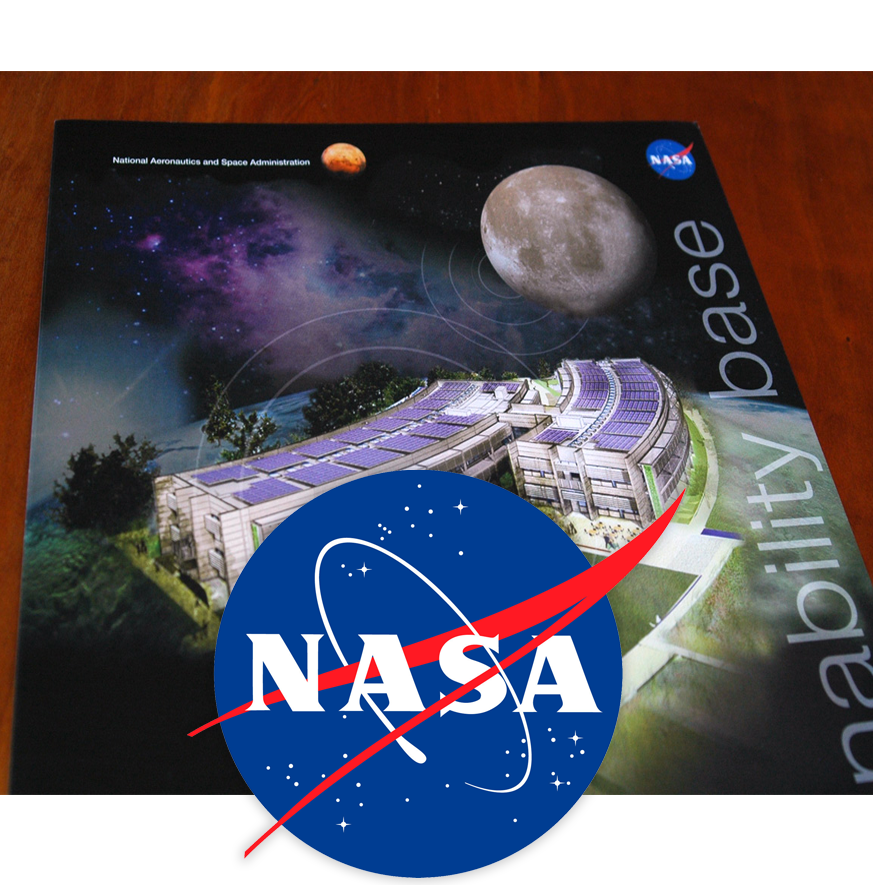
The cover used a composite of space imagery and the building itself — grounding the piece in NASA's identity while establishing the building as something more than architecture. Dark background, dramatic lighting, restrained typographic treatment. The cover needed to feel like a NASA artifact.
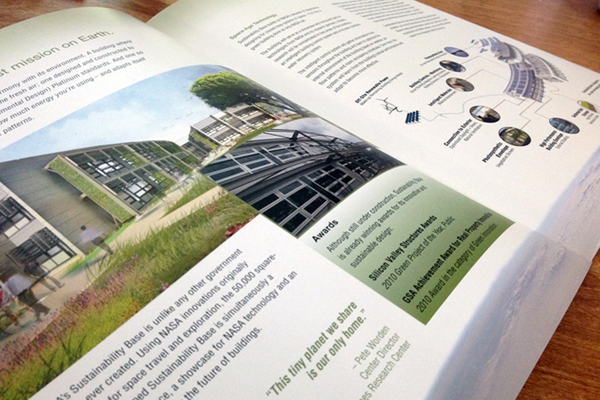
The interior spreads handled the technical complexity of the building's systems — energy generation, water management, structural innovation — in a way that communicated clearly across a wide audience range. Editorial hierarchy, clean information architecture, and photography that documented the actual built environment rather than rendering aspirations.
Flat scans of cover and exterior.
Working at NASA scale
NASA work requires a different kind of attention to detail than most print projects. The brand standards are exacting, the content is technical, and the institutional stakes are high. Getting the tone right — authoritative without being inaccessible, technical without being opaque — was the central design challenge.
The project came through my studio, Kellie Greene Design, via a Silicon Valley branding firm I served as a strategic design consultant to for over a decade. That relationship was built entirely on referrals and delivered quality — the kind of work that gets you into NASA's supply chain through trust rather than procurement.
Why this is in the portfolio
Print design at this level demonstrates craft that doesn't disappear when you're working in a different medium. The ability to hold a complex information architecture, manage production requirements, and deliver work that meets institutional standards at a marquee client — that calibration applies whether the surface is paper or screen.
The NASA piece is also evidence of the referral-based business I ran for 20 years. You don't get called for NASA collateral because you bid the lowest rate. You get called because someone who worked with you before vouched for the work.
Back to work